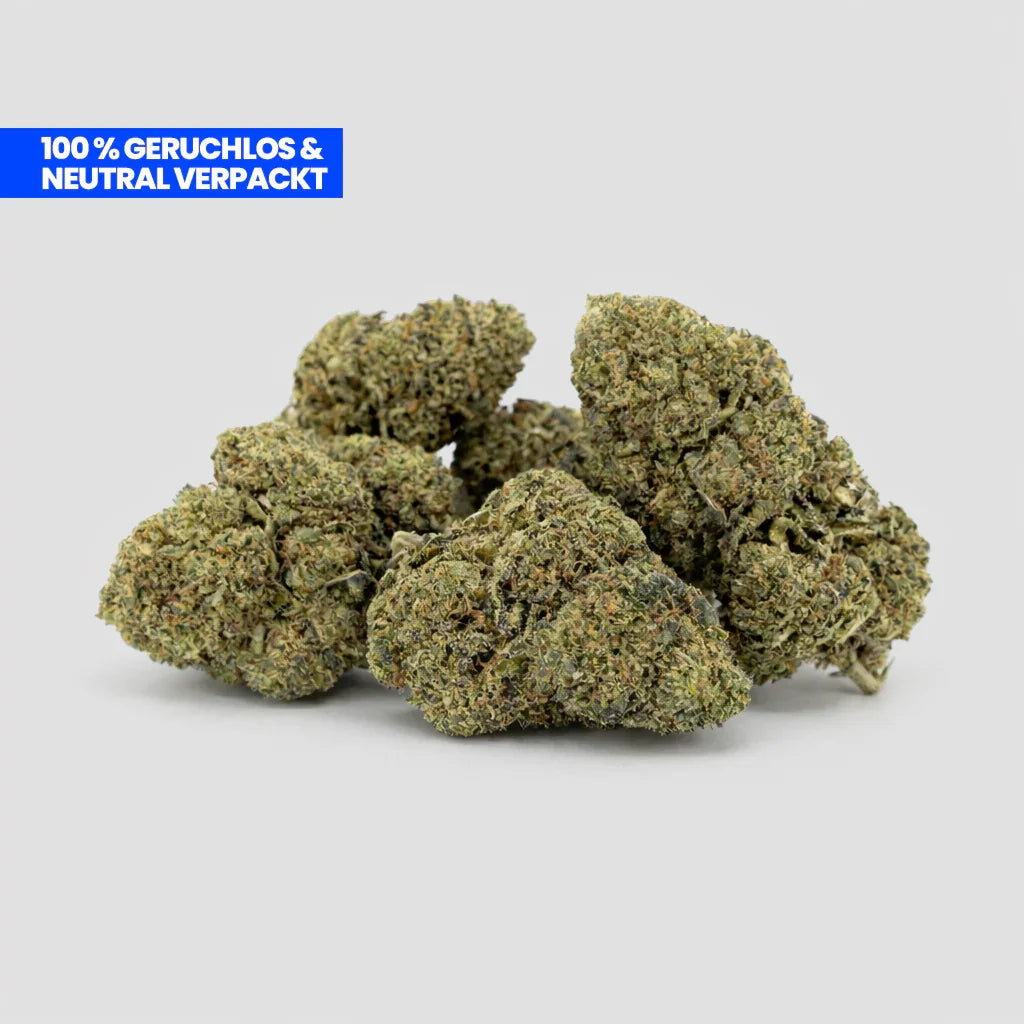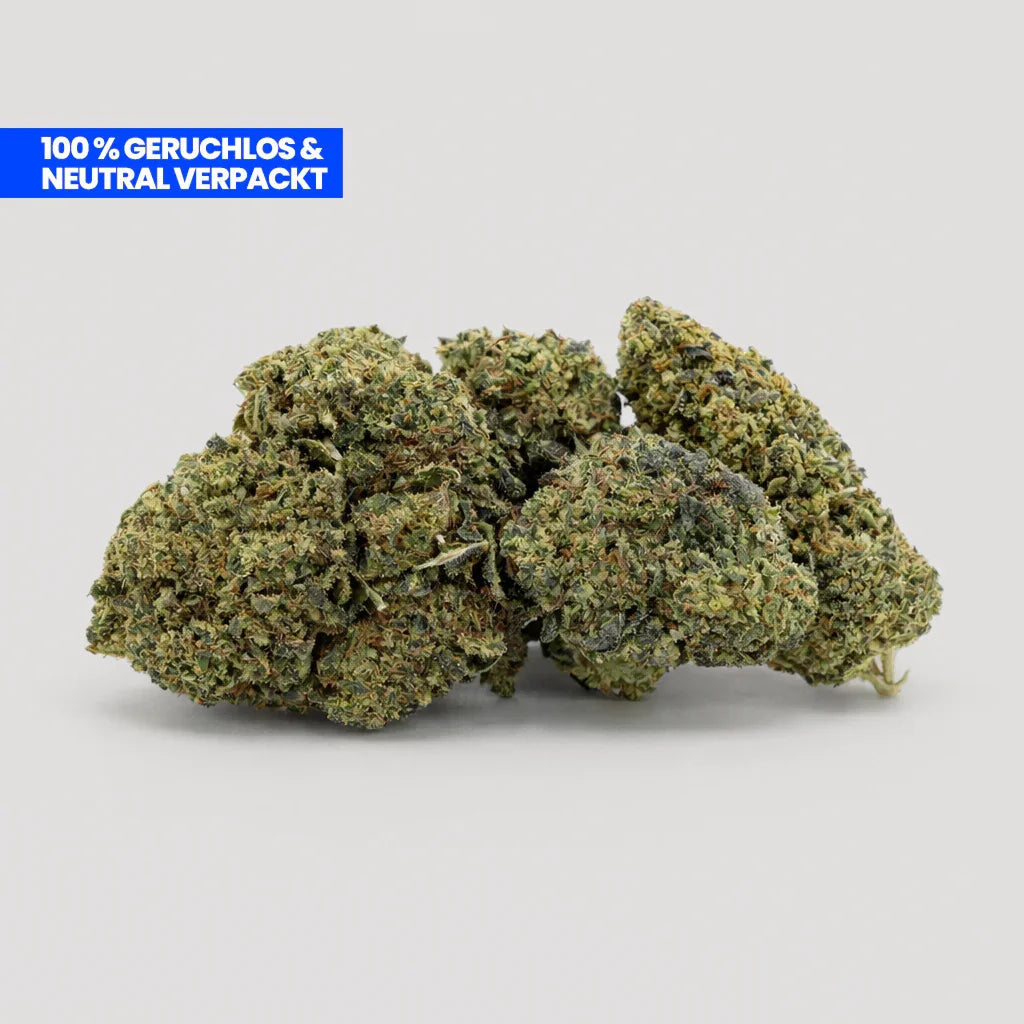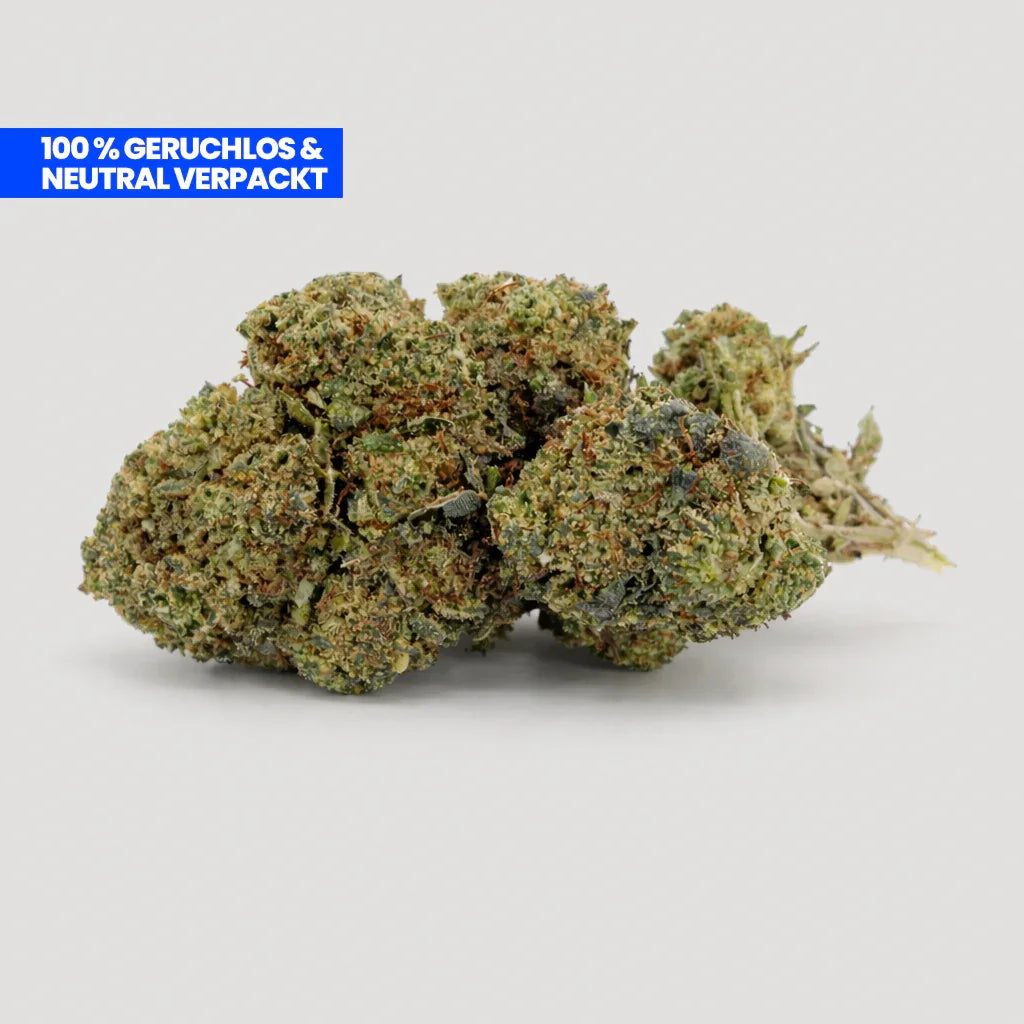
When modern cannabinoids are discussed today, one term comes up particularly often: THCA . On social media, it's frequently described as " THC , but legal," "THC without the high," or "the perfect cannabinoid for sensitive consumers." At the same time, laboratories, legal experts, and cannabinoid specialists are grappling with defining what THCA actually is and its place in the cannabis world. The reality is more complex than the common buzzwords suggest, and it's precisely this complexity that makes THCA so fascinating.

Chemically speaking, THCA, short for tetrahydrocannabinolic acid , is a precursor molecule of THC that occurs naturally in cannabis flowers—and in significantly higher concentrations than THC itself. Raw cannabis contains hardly any psychoactive THC, but almost exclusively THCA. Only when exposed to heat or time does THCA transform into delta-9-THC through decarboxylation . This process is well-documented scientifically and explains why dried, stored, or heated flowers have a completely different effect than fresh ones.

However, one detail is often overlooked: THCA possesses its own biological properties that cannot be reduced to the high of THC. There is evidence of inflammation-modulating effects, antioxidant properties, and potential neuroprotective effects. At the same time, the data is limited, clinical studies are largely lacking, and many findings are based on cell culture or animal models. In a world where cannabinoids are increasingly perceived as wellness products, medical options, or lifestyle ingredients, this distinction is crucial.

Our THC products

Key Takeaways

1. THCA is the chemical precursor of THC and is not psychoactive in its raw form.
The carboxyl group prevents binding to CB1 receptors in the brain. Without heat, there is no high.

2. THCA only transforms into THC through decarboxylation – and it is precisely then that it becomes psychoactive.
When smoked, vaped, or baked, THCA is almost completely converted into Delta-9-THC. The effect then corresponds to the typical THC experience.

3. THCA possesses its own biological properties that are clearly different from THC.
Studies show antioxidant, COX-modulating, and potentially neuroprotective effects, but without a psychoactive component. Research is still in its early stages.

4. The effect depends entirely on the method of consumption.
Consumed raw: mild physical effects, non-psychoactive.
When consumed heated: identical to THC.
Edibles only have an effect if decarboxylation is successful.

5. Legally, THCA is classified in Germany like THC if conversion is possible.
Once THCA can release THC through normal forms of consumption, it is considered a THC equivalent. THCA flowers are therefore not legally marketable.

6. The biggest risk factor lies not in the molecule itself, but in the product quality.
Without lab reports, there is a risk of contamination, inaccurate THC levels, and unclear potency. Transparent analysis is crucial.

7. THCA is not a replacement for THC, but a precursor with its own distinct, mild profile.
Those expecting psychoactive effects must heat THCA. Those who prefer raw consumption receive a cannabinoid with a mild, non-psychoactive physiology.

What is THCA? Chemical and biological basics

THCA belongs to the group of cannabinoid acids that predominate in the raw cannabis plant. While THC , CBD, and CBG are well-known in their neutral forms, these molecules are not produced directly in the plant but only after chemical conversion. The plant synthesizes THCA through an enzymatic biosynthesis pathway that proceeds via CBGA —often referred to as the "mother of all cannabinoids." CBGA is converted into THCA, CBDA, or CBCA by specific synthase enzymes. This finely regulated metabolic network ultimately determines the cannabinoid profile of a flower and its subsequent effects.

Chemically, THCA differs from THC by the carboxyl group (-COOH) attached to its molecular nucleus. This group prevents the molecule from binding to cannabinoid receptors in the central nervous system. The difference may seem small, but it is pharmacologically crucial: although the molecular structures appear similar, the body reacts completely differently to the two substances. This carboxyl group renders THCA non-psychoactive in its raw state, as the molecule only partially crosses the blood-brain barrier and shows little affinity for CB1 receptors.

Decarboxylation: The key moment that transforms THCA into THC

The most important biochemical reaction associated with THCA is decarboxylation . In this process, the carboxyl group is cleaved off, converting THCA into THC . This process occurs when exposed to heat, oxygen, or over extended periods. It is relevant for any consumer who uses cannabis in the form of vapes , flowers , or edibles .

The most important conditions for decarboxylation:

  • Heat: The most efficient method of decarboxylation. Temperatures around 105–120 °C for several minutes already lead to noticeable conversion rates. When smoked or vaporized, THCA is almost completely converted into THC, producing the characteristic psychoactive effect.
  • Time: Even without heat, THCA can slowly oxidize to THC over weeks or months. This process explains why aged flowers show higher THC levels, even if they were originally THCA-dominant.
  • Light and oxygen: These further promote degradation and lead to byproducts such as CBN, so unsuitable storage quickly impairs quality.

For consumers, this means that THCA is only non-psychoactive as long as it is not heated . In practice, almost all consumed forms automatically convert to THC – unless one consumes raw plant material, juices, or extracts without any thermal processing. Therefore, it is important to clearly distinguish between THCA as a biochemical precursor and THC as the active compound.

How does THCA work in the body? A look at receptors and mechanisms.

Although THCA does not produce the psychoactive effects of THC, this does not mean that the substance is biologically inactive. On the contrary: the last ten years have revealed a number of interesting mechanisms that clearly demonstrate that THCA possesses a distinct pharmacological profile.

Studies suggest that THCA:

  • no significant CB1 activity is shown, therefore no psychoactive effect occurs.
  • may exhibit a moderate affinity for CB2 receptors , which are found in immune cells,
  • It could modulate COX enzymes , which would promote anti-inflammatory effects,
  • could show neuroprotective properties in cell culture models,
  • It possesses antioxidant effects that neutralize free radicals.

These effects are not definitively confirmed—some are based on mouse models or isolated cell studies—but they point the way in which current research is heading. Many users subjectively report calmer physical effects , a certain mental clarity , and a feeling of mild relaxation that doesn't develop into a high. These anecdotal reports align with pharmacological logic: if a cannabinoid has little CB1 activity, the psyche remains largely unaffected, while peripheral processes can certainly be modulated.

THCA is playing an increasingly important role, particularly in the wellness sector, where raw cannabis is used as a food ingredient or extract. Some people prefer THCA-containing tinctures because they seek physical effects without psychoactive side effects. Such applications remain individual and scientifically incomplete, but are an important part of modern cannabinoid culture.

THCA vs. THC : A precise comparison

To truly understand THCA, a direct comparison with THC is essential. The two molecules differ not only chemically, but also in their effects, risks, and legal implications.

Psychoactivity

  • THCA: Non-psychoactive.
  • THC: Strongly psychoactive due to CB1 binding in the brain.

Receptor activity

  • THCA: Minimal CB1 activity, possibly peripheral effects via CB2.
  • THC: High CB1 and moderate CB2 affinity.

metabolism

  • THCA: Is partially metabolized to THC in the body, but only in minimal amounts.
  • THC: Is converted to 11-OH-THC and later to THC-COOH.

use

  • THCA: In raw extracts, juices, tinctures, research laboratories.
  • THC: In vapes, edibles, flowers, and medical cannabis.

Legal significance

Here the difference becomes most apparent: In Germany, cannabinoid law is regularly updated. THCA is legally classified as producing THC when heated . Therefore, regardless of whether it is technically non-psychoactive, the substance cannot be legally distinguished from THC as soon as a potential for abuse or consumption becomes apparent.

That means:
In Germany, THCA is effectively treated like THC when it is clear that the product decarboxylates to THC through normal forms of consumption.

This distinction is essential for consumers who wish to order or consume THCA products. While the legal framework can change at any time, authorities consistently rely on chemical logic: a substance that can be converted into THC with minimal effort generally falls under THC-related regulations.

Visualization of THCA's effect in the body based on chemical structure and plant material<!--nl-->

How do users consume THCA – and why does the effect vary so much?

THCA is an astonishingly versatile cannabinoid because its effects depend entirely on how it is consumed. This distinction is more important than with almost any other cannabinoid. Many misunderstandings arise precisely at this point: people hear that THCA is "non-psychoactive," but then see others smoking THCA flowers and experiencing a clear THC effect. Without the principle of decarboxylation, this contradiction seems illogical, but chemically, the explanation is clear.

1. THCA in raw form (juices, tinctures, unheated extracts)

When consumed without heat, THCA has no psychoactive effects . Some users report physical relaxation, a gentle regulation of well-being, or reduced inner restlessness. These effects are subtle, partly speculative, and not definitively scientifically confirmed. Nevertheless, they reflect a pattern frequently seen with cannabinoids: a substance can have physiological effects without influencing the psyche.

THCA is increasingly used in the wellness sector. Some users combine raw THCA with terpenes or CBD to utilize the antioxidant effects described in cell studies. This demonstrates the growing diversity of cannabinoid applications.

2. THCA in vapes or when smoking flowers

Once THCA is heated, it transforms into delta-9-THC. This transition is virtually complete and explains why THCA flowers were traded as a "legal high" in some US states before regulators clarified the legal situation. However, the chemical reality leaves no room for interpretation: when a consumer smokes or vaporizes THCA flowers, they are consuming THC . The effect is accordingly psychoactive, with all the classic effects such as euphoria, altered perception, mild cognitive modulation, physical relaxation, or—depending on the dose—an increased heart rate.

Many consumers describe the effects of decarboxylated THCA as clearer , more focused , or less oppressive than those of classic THC. This could be due to the cannabinoid matrix, as THCA flowers in American markets often undergo purification processes or extracts that produce a different terpene profile. However, these are subjective impressions, not scientifically confirmed differences.

3. THCA in Edibles

THCA must be heated for edibles to have a psychoactive effect. If decarboxylation does not occur, the edible remains virtually ineffective. Many recreational uses fail precisely at this point: If the carboxyl group is not cleaved, neither THC nor its potent metabolites like 11-OH-THC are produced.
For modern edible production, a clear standard therefore applies: THCA is either pre-activated or converted to THC through the baking or cooking process. Laboratory analyses show that temperature-controlled production is crucial to achieving consistent and predictable potency.

Our THC products

Why is THCA not a substitute for THC despite its own effects?

THCA possesses its own biological properties, but it is not suitable as a psychoactive alternative. This distinction is important because some consumers try to use THCA exactly like THC and are disappointed when the expected effect fails to materialize. The biochemical reality is clear:

  • There is no high as long as you don't heat THCA.
  • THCA barely penetrates the brain.
  • It has no agonistic effect at the CB1 receptor.
  • It does not produce typical THC derivatives such as 11-OH-THC.

If consumers do experience "effects," these are usually peripheral physiological reactions or placebo effects. This doesn't mean these sensations are irrelevant, but they are clearly distinguishable from the psychoactive effects of cannabis.

Risks of THCA: What is known, what is still unclear?

Compared to THC, research on THCA is significantly more limited. Nevertheless, risks can be identified based on the current state of scientific knowledge.

1. Risks of decarboxylated THCA (i.e., THC)

Heating THCA means consuming THC – and therefore the same risks apply:

  • Heart rate increase
  • Perceptual changes
  • potential anxiety or unease
  • cognitive impairments
  • motor impairment
  • possible tolerance development

These effects are well documented. THCA often becomes problematic when consumers believe they are consuming a "harmless" substance, when in reality they are inhaling THC.

2. Risks of raw THCA

The following points are relevant for unheated THCA:

  • There are few human studies.
  • Theoretically, interactions with medications could occur.
  • Overdoses are unlikely, but not fully researched.
  • Allergic reactions to plant components are possible.

The effect is mild, but even mild cannabinoids should be consumed with care, especially if you are taking medication, have chronic illnesses, or are sensitive to bioactive plant substances.

3. Contamination and quality defects

The biggest real risk factor is not the effects of THCA – but the often poor quality of inferior products.
The following are particularly problematic:

  • Solvent residues
  • Pesticides
  • Heavy metals
  • inaccurate potency measurements
  • lack of laboratory insights

Especially because THCA is increasingly appearing in the smart shop sector, transparency is a crucial security factor.

THCA flower with indication of the conversion to THC during decarboxylation<!--nl-->

The legal status of THCA in Germany

The legal assessment of THCA follows a clear pharmacological logic:
If a substance can be easily converted into THC, it is legally considered to be the same as THC.

This assessment is based on:

  • the principle of the risk of abuse
  • the clear chemical relationship
  • the almost complete conversion at heat
  • Decisions from the case law of recent years

In Germany, this means:

  • THCA is considered equivalent to THC once it is consumable.
  • Most THCA products are not legally marketable if they could release THC.
  • The limit of 0.3% THC content also applies to products containing THCA, because decarboxylation is taken into account.

This explains why THCA flowers are not available in legal shops in this country, while they are part of the standard product range in the USA or other regions.

For consumers, the consequence is clear:

THCA is not a legal alternative to THC in Germany.

This clarity is important so that consumers do not unintentionally fall into a legal gray area.

THCA compared to other modern cannabinoids

To find your way around the modern smartshop spectrum, it helps to look at alternative cannabinoids:

THC

Psychoactive, extensively researched, and strictly regulated by law.

CBD

Non-psychoactive, diverse physiological effects, legally available.
Further information: Buy CBD

HHC

Semi-synthetic cannabinoid with THC-like effects, variable depending on the isomer.
Further information: Buy HHC

PHC

A prodrug that is partially converted to THC in the body; its effects are slower and gentler.

10-OH-HHC

Metabolite of HHC, bioactive, but hardly studied scientifically.

THCA

Precursor of THC, non-psychoactive without heat; legally relevant due to decarboxylation.

In this matrix, THCA occupies a special role: It is simultaneously natural, biologically fascinating, and legally sensitive.

Infographic illustrating the effects of THCA compared to THC

What should you look out for when buying THCA products?

Even though THCA is only marketable to a limited extent in Germany, it is worth taking a look at the standards that a reputable shop must meet in order to offer cannabinoid products responsibly.

1. Lab Reports

A shop like HappyFlower works with certified laboratories that disclose cannabinoid profiles, potencies, residues, and safety tests.
The important thing is:

  • exact THCA and THC levels
  • Terpene profile
  • Detection of heavy metals
  • solvent residues
  • Mycotoxins

Only complete COAs (Certificates of Analysis) create true transparency.

2. Purity & Cannabinoid Profile

THCA should be precisely quantified. Since the substance decarboxylates upon heat, values ​​must be stated realistically and conservatively. A reputable dealer will always provide:

  • Δ9-THC
  • THCA
  • Total THC after decarboxylation

These values ​​allow for an accurate assessment of the legal and pharmacological situation.

3. Production & Origin

Products should come from controlled growing regions where:

  • no pesticides were used
  • a safe extraction takes place
  • Standards are documented

Happy Flower relies on processes that guarantee purity and consistency.

4. Transparent communication

A professional shop describes:

  • no unsubstantiated claims of effectiveness
  • no misleading claims such as "legal high"
  • differentiated information on risks and forms of consumption

In today's cannabinoid market, reliability is more valuable than any trend.

The Happy Flower quality approach

HappyFlower focuses on:

  • full laboratory access
  • fair prices and transparent origin
  • clear communication
  • tested extraction methods
  • natural or precisely standardized cannabinoid profiles

Even if THCA remains legally problematic in Germany, the same quality principles apply to all products – from CBD oils to HHC vapes to edibles and smartshop innovations.

THCA is important – but completely misunderstood.

THCA is one of the most interesting cannabinoids of all time – biologically, biochemically, and regulatoryly. But above all, the substance is a precursor to THC that radically changes its identity when exposed to heat. Anyone who wants to understand how modern cannabinoids work cannot ignore THCA. Its role as the starting point for psychoactive effects, as a marker in laboratory tests, as a potentially bioactive compound, and as a legally sensitive molecule makes it unique.

For informed consumers:

  • THCA is not psychoactive as long as it is not heated.
  • Once heated, THC is produced – with all the classic effects.
  • The legal situation in Germany is clear: THCA is considered the same as THC if consumption is possible.
  • Quality, purity, and lab reports are the most important safety factors.

THCA demonstrates how fine the boundaries are in the world of cannabinoids and how crucial scientific precision is in a time when new substances quickly go viral. Understanding THCA also means understanding why cannabinoids should never be considered in isolation – but always within the context of chemistry, effects, risks, and social responsibility.

Frequently asked questions (FAQs)

1. Is THCA psychoactive?

No. THCA is not psychoactive as long as it is not heated. THC, which has psychoactive effects, is only produced through decarboxylation.

2. Does THCA automatically convert to THC when vaporized?

Yes. Heat leads to almost complete conversion, which is why THCA acts like THC when vaped or smoked.

3. Is THCA legal in Germany?

Only to a very limited extent. Since THCA decarboxylates to THC, it is legally treated like THC.

4. Can THCA be consumed raw?

Yes, for example in juices or unheated extracts. No psychoactive effect is produced in these cases.

Everything about cannabis

View all

Cannabis Tinktur herstellen: Braune Pipettenfläschchen für Tinktur und Extrakte

Cannabis Tinktur herstellen: Der komplette Guide zu Wirkung, Methoden & Dosierung

Das Wichtigste in Kürze Eine Cannabis Tinktur ist ein flüssiger Extrakt — meist auf Alkohol-, Glycerin- oder Ölbasis Alkoholtinkturen sind am potentesten und am längsten haltbar (bis zu 5 Jahre bei richtiger Lagerung) Ohne Decarboxylierung passiert gar nichts — THCA...

Read moreabout Cannabis Tinktur herstellen: Der komplette Guide zu Wirkung, Methoden & Dosierung

THCJD: Wirkung, Erfahrungen & Legalität erklärt

THCJD: Wirkung, Erfahrungen & Legalität erklärt

  Was ist THCJD? Wirkung, Erfahrungen & Legalität im ehrlichen Check 19-mal stärker als THC. Das ist die Zahl, die seit ein paar Jahren durchs Netz geistert, sobald irgendwo "THCJD" fällt. Klingt nach Hype, klingt nach Marketing – und tatsächlich...

Read moreabout THCJD: Wirkung, Erfahrungen & Legalität erklärt

CBG vs CBD – Cannabinoide im Vergleich

CBG vs CBD – Wirkung, Unterschied & was die Forschung wirklich sagt

CBG vs CBD – Wirkung, Unterschied & was die Forschung wirklich sagt CBD kennt mittlerweile fast jeder. CBG dagegen taucht immer häufiger auf Produktetiketten auf – mit Versprechen, die klingen wie eine verbesserte Version von CBD. Aber stimmt das? Ist...

Read moreabout CBG vs CBD – Wirkung, Unterschied & was die Forschung wirklich sagt