
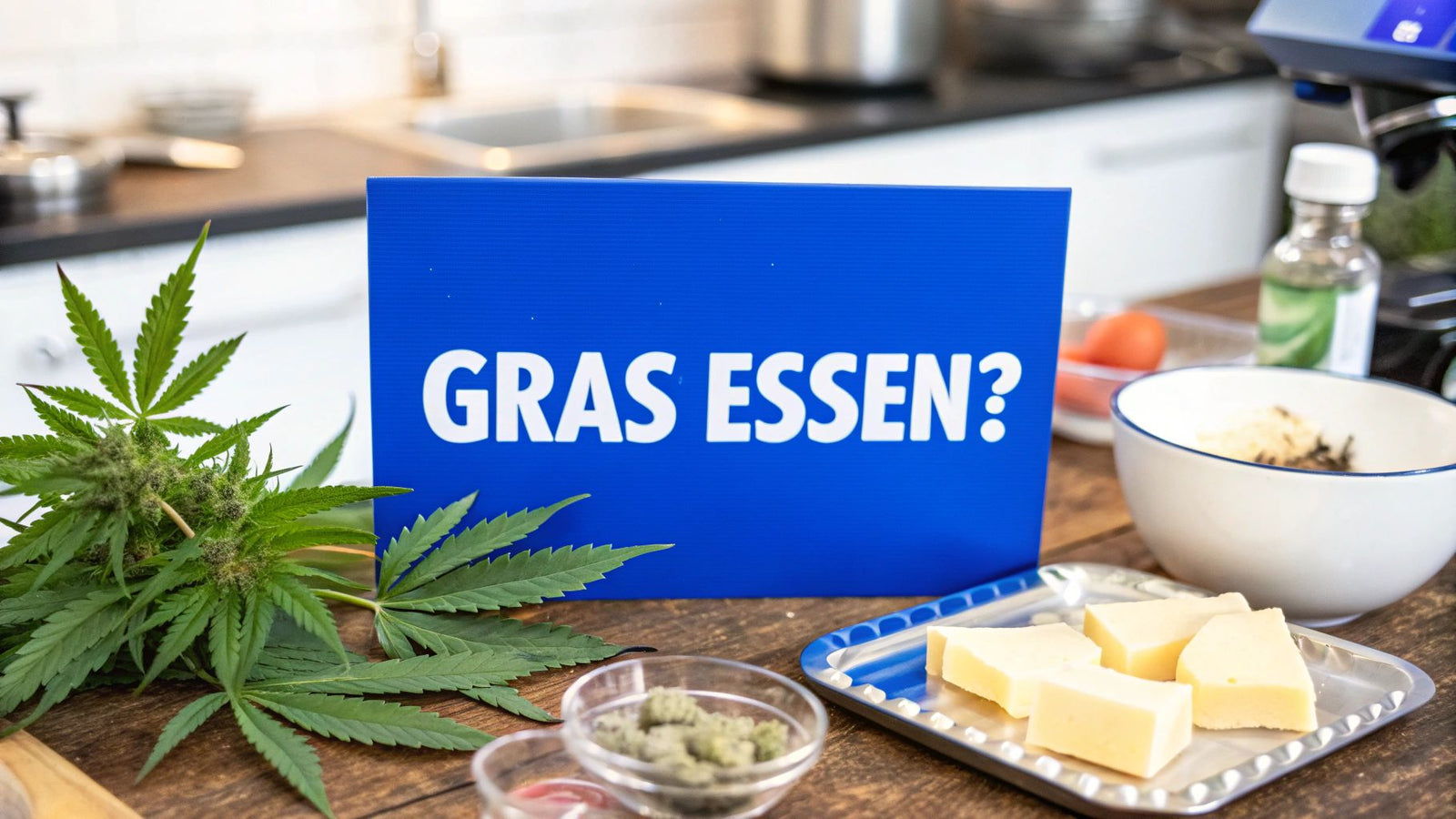
Ja, man kann Gras essen – aber einfach eine rohe Blüte in den Salat zu werfen, wird dich nicht high machen. Der gewünschte Effekt bleibt komplett aus, weil die entscheidende psychoaktive Substanz in einer inaktiven Form vorliegt. Der Schlüssel, um die volle Wirkung freizusetzen, ist denkbar einfach: Hitze. Erst sie startet die nötige chemische Umwandlung.
Die schnelle antwort warum man gras nicht roh essen sollte
Wenn du dich fragst, warum du dein Cannabis nicht einfach so naschen solltest, liegt die Antwort in einem kleinen Molekül namens THCA (Tetrahydrocannabinolsäure). Das ist die direkte Vorstufe des berühmten THC, das für die berauschende Wirkung sorgt. Frische, rohe Cannabisblüten sind randvoll mit diesem THCA – einer Säure, die für sich genommen so gut wie keine psychoaktiven Eigenschaften hat.
Dein Körper kann diese Säure nicht einfach so in das wirksame THC umwandeln. Stell es dir wie einen verschlossenen Tresor vor: Der wertvolle Inhalt, also die Wirkung, ist zwar da, aber du hast den falschen Schlüssel. Erst ein Prozess namens Decarboxylierung knackt diesen Tresor für dich.
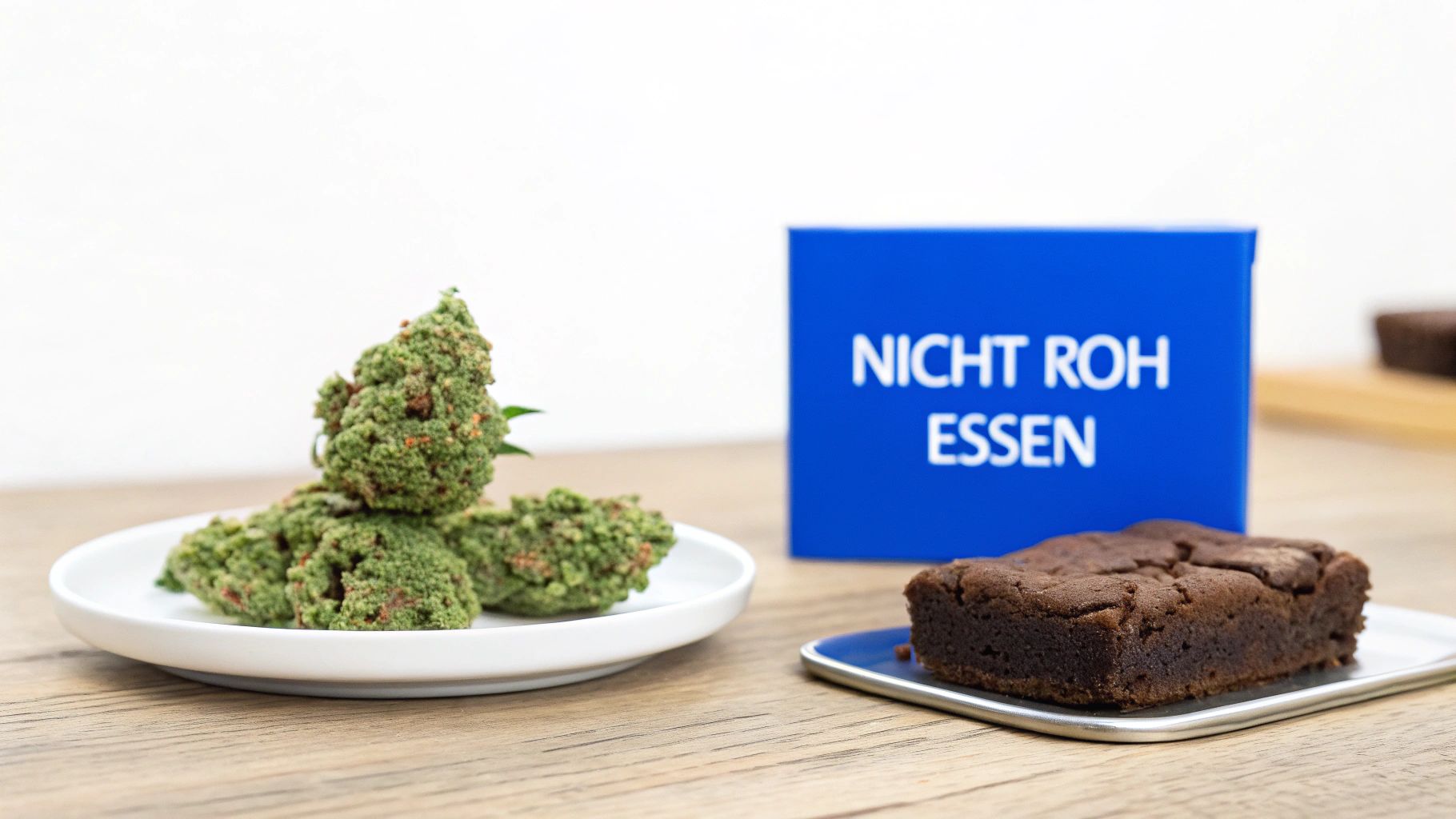
Der unterschied liegt in der hitze
Decarboxylierung klingt kompliziert, meint aber nichts anderes als das gezielte Erhitzen von Cannabis. Durch die Hitze wird eine Carboxylgruppe vom THCA-Molekül abgespalten, und zack – es verwandelt sich in das psychoaktive THC. Ohne diesen entscheidenden Schritt isst du im Grunde nur eine geschmacklich interessante, aber wirkungslose Pflanze.
Der häufigste Fehler bei selbstgemachten Edibles? Ganz klar, die Decarboxylierung zu überspringen. Wer das vergisst, verschenkt das gesamte Potenzial seiner Blüten und wundert sich dann, warum der Brownie nicht kickt.
Rohes vs. erhitztes cannabis im direkten vergleich
Um die Unterschiede auf den Punkt zu bringen, haben wir hier eine kleine Gegenüberstellung für dich. Diese Tabelle zeigt dir auf einen Blick, warum die richtige Zubereitung alles verändert.
| Merkmal | Rohes Cannabis (nicht erhitzt) | Aktiviertes Cannabis (decarboxyliert) |
|---|---|---|
| Hauptwirkstoff | THCA (Tetrahydrocannabinolsäure) | THC (Tetrahydrocannabinol) |
| Psychoaktivität | Kaum bis gar nicht psychoaktiv | Stark psychoaktiv |
| Anwendung | Manchmal in Smoothies als „Superfood“ | Basis für Edibles wie Brownies oder Butter |
| Ergebnis beim Essen | Keine berauschende Wirkung | Intensive, langanhaltende Wirkung |
Kurz gesagt: Gras essen funktioniert, aber nur, wenn du es vorher richtig vorbereitest. Das THCA zu verstehen, ist der erste und wichtigste Schritt auf diesem Weg. Wenn du tiefer in die faszinierenden Eigenschaften dieses Cannabinoids eintauchen möchtest, erklärt dir unser Guide, was THCA genau ist und warum es so eine zentrale Rolle spielt.
Die Chemie hinter der Wirkung verstehen
Wer schon mal neugierig auf eine rohe Cannabisblüte gebissen hat, war vermutlich enttäuscht. In Sachen berauschender Wirkung passiert da nämlich: so gut wie nichts. Der Grund dafür steckt tief in der Chemie der Pflanze. In der rohen Blüte liegt das Cannabinoid hauptsächlich als THCA (Tetrahydrocannabinolsäure) vor – einer inaktiven Vorstufe des bekannten THC.
Man kann sich THCA wie eine gesicherte, „verschlossene“ Version von THC vorstellen. An dem Molekül hängt eine kleine chemische Kette dran, eine sogenannte Carboxylgruppe. Dieser Anhang ist wie ein Störfaktor, der verhindert, dass das Molekül an die Cannabinoid-Rezeptoren im Gehirn andocken kann – also genau dorthin, wo das „High“-Gefühl entsteht.
Das Verdauungssystem allein schafft es nicht, diese chemische Sperre zu knacken. Ohne den passenden Schlüssel bleibt die Tür zur psychoaktiven Wirkung also fest verschlossen. Und dieser Schlüssel ist erstaunlich simpel: Hitze.
Der Schlüssel heißt Decarboxylierung
Der Prozess, der THCA in das psychoaktive THC umwandelt, nennt sich Decarboxylierung. Durch gezieltes Erhitzen – klassischerweise im Backofen – wird die eben erwähnte Carboxylgruppe einfach abgespalten. Erst durch diese kleine, aber entscheidende Veränderung passt das Molekül perfekt auf die Rezeptoren in unserem Nervensystem und kann seine volle Wirkung entfalten.
Dieser Vorgang ist fundamental, um die Frage „Kann man Gras essen?“ korrekt zu beantworten. Ja, aber eben nur, wenn dieser Aktivierungsschritt vorher stattgefunden hat. Ohne ihn konsumierst du zwar Cannabinoide, aber eben nicht die, die für den typischen Rausch verantwortlich sind.
Rohes Cannabis zu essen, in der Hoffnung auf eine psychoaktive Wirkung, ist vergleichbar mit dem Versuch, ein Auto mit dem falschen Schlüssel zu starten. Der Motor (dein Körper) ist bereit, aber die Zündung (die chemische Aktivierung) fehlt komplett.
Die Art und Weise, wie THC und unser Körper miteinander kommunizieren, ist ein faszinierendes Zusammenspiel. Wenn du tiefer einsteigen willst, wie Cannabinoide unser Nervensystem beeinflussen, schau dir unseren Beitrag zum Endocannabinoid-System an – dort haben wir alles einfach erklärt.
Rohes Cannabis ist kein Rauschmittel, sondern ein Superfood?
Auch wenn rohe Cannabisblüten dich nicht high machen, sind sie deshalb noch lange nicht nutzlos. Ganz im Gegenteil: Einige Gesundheits-Enthusiasten werfen rohe Cannabisblätter und -blüten als eine Art „Superfood“ in ihre Smoothies oder Säfte. Der Grund sind die potenziellen gesundheitlichen Eigenschaften der Cannabinoidsäuren selbst.
THCA und andere Säuren wie CBDA (die Vorstufe von CBD) werden aktuell auf ihre möglichen entzündungshemmenden und nervenschützenden Eigenschaften hin untersucht. Sie interagieren völlig anders mit dem Körper als ihre aktivierten Gegenstücke und bieten ein eigenes Spektrum an potenziellen Vorteilen – ganz ohne berauschende Effekte.
Beim Verzehr von rohem Cannabis nimmst du also eine Fülle von Terpenen, Flavonoiden und eben diesen Cannabinoidsäuren auf. Das hat aber nichts mit dem klassischen „Edible“-Erlebnis zu tun, sondern ist rein auf ernährungsphysiologische Aspekte ausgerichtet.
Die Erwartungen richtig managen
Wer diese chemischen Grundlagen verstanden hat, kann seine Erwartungen realistisch einschätzen und Enttäuschungen vermeiden. Die Zubereitungsmethode ist nicht nur ein kleiner Schritt – sie ist der alles entscheidende Faktor, der über Wirkung oder Nicht-Wirkung entscheidet.
- Dein Ziel: Eine psychoaktive Wirkung? Dann ist die Decarboxylierung durch Erhitzen absolut unerlässlich.
- Dein Ziel: Ein ernährungsphysiologischer Nutzen? Dann kann rohes Cannabis in Maßen eine spannende Ergänzung sein, ähnlich wie Grünkohl oder Spinat.
Letztendlich entscheidet dein Ziel darüber, wie du Cannabis in der Küche einsetzt. Wer die Chemie versteht, kann bewusst steuern, welches Potenzial der Pflanze er freisetzen möchte.
Decarboxylierung: die anleitung für deine küche
Decarboxylierung klingt erstmal wie ein Zungenbrecher aus dem Chemieunterricht, ist aber im Grunde kinderleicht. Stell es dir wie das Aktivieren eines versteckten Superhelden in deinem Cannabis vor. Ohne diesen entscheidenden Schritt bleibt die ganze Power ungenutzt. Wir zeigen dir, wie du diesen Prozess easy zu Hause im Backofen meisterst – ohne fancy Laborausrüstung.
Wir gehen das Ganze jetzt Schritt für Schritt durch, als würden wir zusammen in deiner Küche stehen. Alles, was du brauchst, sind dein Ofen, ein Backblech und ein Bogen Backpapier.
Diese Infografik bringt den ganzen Prozess auf den Punkt:

Du siehst: Ein bisschen Hitze verwandelt eine rohe Blüte mit „schlafendem“ Potenzial in ein Kraftpaket, das dein Körper erst richtig nutzen kann.
Die perfekte kombination aus temperatur und zeit
Das ganze Geheimnis einer guten Decarboxylierung ist das richtige Timing bei der richtigen Temperatur. Es ist ein Balanceakt: Wir wollen das THCA in THC umwandeln, aber ohne die wertvollen Terpene (die für Geruch und Geschmack sorgen) zu verbrennen. Zu heiß oder zu kurz, und du verschwendest Potenzial.
Die goldene Regel für den Backofen lautet: niedrig und langsam. Zu viel Hitze zerstört die wertvollen Cannabinoide schneller, als sie aktiviert werden. Ein bisschen Geduld zahlt sich hier richtig aus.
Die meisten Experten schwören auf eine Temperatur zwischen 105 °C und 120 °C. Klar, bei mehr Hitze geht es schneller, aber das Risiko, alles zu verbrennen, steigt dramatisch. Mit einer niedrigeren Temperatur dauert es zwar einen Moment länger, aber die Umwandlung ist viel schonender und am Ende effektiver.
Schritt-für-schritt-anleitung für den backofen
Bereit? Mit dieser Anleitung kann wirklich nichts schiefgehen.
-
Vorbereiten: Heize deinen Backofen auf gemütliche 110 °C vor. Zerkleinere deine Blüten grob, ungefähr auf die Größe von Reiskörnern. Bitte mahl sie nicht zu Pulver – das verbrennt nur unnötig schnell.
-
Verteilen: Schnapp dir ein Backblech und leg es mit Backpapier aus. Darauf verteilst du dein zerkleinertes Cannabis in einer dünnen, gleichmäßigen Schicht. Das ist superwichtig, damit die Hitze überall gleichmäßig hinkommt.
-
Backen: Ab in den Ofen damit! Lass das Ganze für 30 bis 45 Minuten backen. Die genaue Zeit hängt immer ein bisschen von der Sorte und der Restfeuchtigkeit deines Materials ab.
-
Wenden & Lüften: Schau nach etwa 20 Minuten mal rein und wende das Gras vorsichtig, damit alles gleichmäßig gebräunt wird. Deine Küche wird jetzt einen ziemlich intensiven, nussigen Duft annehmen – also am besten das Fenster aufmachen!
-
Abkühlen: Sobald das Cannabis eine schöne goldbraune Farbe hat und sich trocken anfühlt, ist es perfekt. Nimm das Blech aus dem Ofen und lass alles komplett abkühlen. Jetzt ist dein Material aktiviert und bereit für Butter, Öl oder was auch immer du vorhast.
Falls du noch tiefer eintauchen und verschiedene Methoden vergleichen willst, schau dir unseren ausführlichen Guide zur Cannabis Decarboxylierung an. Dort findest du noch mehr Profi-Tipps.
Typische fehler, die du locker vermeiden kannst
Obwohl es einfach ist, gibt es ein paar klassische Stolperfallen. Aber keine Sorge, wenn du sie kennst, passiert dir das nicht.
- Zu viel Hitze: Der absolute Klassiker. Alles über 150 °C ist der Tod für THC und Terpene. Vertrau nicht blind auf die Anzeige deines Ofens – ein günstiges Ofenthermometer kann hier Wunder wirken und dir die exakte Temperatur zeigen.
- Zu fein gemahlen: Wenn du dein Gras pulverisierst, verbrennen die Ränder, bevor die Mitte überhaupt eine Chance hatte, richtig zu decarboxylieren. Grob zerkleinern ist der Weg zum Erfolg.
- Keine Geduld: Wer den Prozess abkürzen will, bekommt am Ende nur halb-aktiviertes Material. Halte dich an die Zeit und achte auf die Farbe – sie ist dein bester Freund und verrät dir, wann es so weit ist.
Wenn du diese einfachen Tipps beherzigst, verwandelst du rohes Pflanzenmaterial in eine potente Zutat für deine kulinarischen Abenteuer. Damit ist die wichtigste Hürde genommen, um Cannabis sicher und mit voller Wirkung zu genießen.
Die besondere Wirkung von Edibles verstehen
Wer sich fragt, ob man Gras essen kann, kommt an der Wirkung nicht vorbei – und die ist eine komplett andere Welt als beim Rauchen oder Vapen. Stell es dir so vor: Rauchen ist ein kurzer, heftiger Sprint. Edibles hingegen sind ein ausgedehnter Marathon. Start, Strecke und Ziel fühlen sich völlig anders an.
Der entscheidende Unterschied liegt im Weg, den das THC durch deinen Körper nimmt. Beim Rauchen schießt es direkt über die Lunge ins Blut und flutet dein Gehirn innerhalb von Minuten. Beim Essen wählt es den langen, malerischen Umweg: erst durch den Magen, dann in die Leber – die zentrale Chemiefabrik unseres Körpers.
Der Leber-Effekt und das magische 11-Hydroxy-THC
In der Leber passiert dann das, was Edibles ihre berüchtigte Power verleiht. Hier wird das bekannte Delta-9-THC in eine viel stärkere Verbindung umgewandelt: 11-Hydroxy-THC. Dieses neue Molekül ist ein echter Überflieger. Es überwindet die Blut-Hirn-Schranke wesentlich leichter als sein Vorgänger.
Das Resultat? Ein Effekt, der nicht nur intensiver ist, sondern oft auch viel körperlicher und psychedelischer wahrgenommen wird. Genau diese biochemische Magie ist der Grund, warum selbst erfahrene Hasch-Veteranen von der Wucht eines Brownies überrascht werden können.
Der Umweg über die Leber ist der Game-Changer. Er verzögert den Start, aber sobald das Rennen losgeht, hat es eine ganz andere Intensität. Diesen „First-Pass-Effekt“ zu kapieren, ist der Schlüssel für eine sichere und gute Erfahrung.
Geduld ist die goldene Regel
Dieser ganze Prozess braucht Zeit. Viel Zeit. Während der Joint fast sofort kickt, kann es bei Edibles 30 Minuten bis zu zwei Stunden dauern, bis du überhaupt etwas spürst. Und genau hier lauert die größte Falle für Einsteiger. Die Ungeduld nagt, und der Klassiker passiert: „Ich merk nichts, ich ess noch ein Stück.“
Ein fataler Fehler. Denn kurz nachdem du nachgelegt hast, setzt plötzlich die Wirkung der ersten Dosis ein – und die zweite ist schon auf dem Weg. Das Ergebnis kann schnell eine überwältigende und unangenehme Erfahrung werden. Merk dir also eine eiserne Regel: Warte nach der Einnahme immer mindestens zwei volle Stunden, bevor du auch nur darüber nachdenkst, mehr zu nehmen.
Ein Marathon, kein Sprint
Wenn die Wirkung dann da ist, ist sie gekommen, um zu bleiben. Im Gegensatz zum relativ kurzen Rausch beim Rauchen (meist 1–3 Stunden), ist das Edible-Erlebnis ein Langstreckenflug.
- Wirkungseintritt: 30–120 Minuten
- Wirkungshöhepunkt: Oft erst nach 2–4 Stunden erreicht
- Gesamtwirkdauer: Üblicherweise 6–8 Stunden, manchmal sogar länger
Diese lange Dauer erfordert Planung. Ein Edible am späten Abend kann bedeuten, dass du am nächsten Morgen immer noch einen leichten Nachhall spürst. Konsumiere also nur, wenn für den Rest des Tages keine wichtigen Termine mehr anstehen.
Obwohl der Konsum zunimmt, ist das Wissen über sicherere Alternativen wie Edibles noch überschaubar. Laut dem Datenportal des Bundesdrogenbeauftragten haben 2021 rund 10 % der Erwachsenen in Deutschland mindestens einmal Cannabis probiert – fast doppelt so viele wie 2012. Über 80 % greifen dabei zum klassischen Joint. Edibles sind noch eine Nische, obwohl sie eine kontrollierbare Alternative sein könnten.
Wer die Grundlagen von Edibles noch weiter vertiefen möchte, findet in unserem umfassenden Guide zu Cannabis Edibles Grundlagen und Wirkung die perfekte Ergänzung. Die langsame, aber kraftvolle Natur macht sie zu einer einzigartigen Erfahrung, die Respekt und Vorbereitung verlangt.
Dosierung meistern und unerwünschte effekte vermeiden

Wenn du dich entscheidest, Gras zu essen, ist die Dosierung das absolute A und O für eine gute Erfahrung. Die goldene Regel, die in der Community jeder kennt und predigt, lautet: „Start low and go slow“ – fang also mit ganz wenig an und taste dich langsam hoch. Dieser Spruch ist kein leeres Gerede, sondern dein wichtigstes Sicherheitsnetz.
Bei Edibles gibt es kein Zurück. Einmal geschluckt, nimmt dein Verdauungssystem die Arbeit auf, und du kannst die Intensität nicht einfach mal eben runterdrehen. Genau deshalb ist es so verdammt wichtig, von Anfang an die Kontrolle zu behalten und eine Überdosierung zu vermeiden – denn die kann schnell in Unwohlsein, Angst oder sogar Paranoia umschlagen.
Was bedeutet eine „niedrige dosis“ wirklich?
In der Welt der Edibles wird die Stärke in Milligramm (mg) THC angegeben. Gerade für absolute Anfänger ist es entscheidend, diese Zahlen zu verstehen, um nicht aus Versehen eine Dosis zu erwischen, die sie komplett überfordert.
Hier ist eine einfache Orientierungshilfe:
- Mikrodosis (1 - 2,5 mg THC): Perfekt für alle, die zum allerersten Mal probieren. Die Effekte sind mild und kaum spürbar, vielleicht eine leichte Entspannung oder eine bessere Stimmung. Ideal, um die eigene Empfindlichkeit auszutesten, ohne überrannt zu werden.
- Niedrige Dosis (2,5 - 5 mg THC): Gilt als die Standard-Einsteigerdosis. Die Wirkung ist klar spürbar, aber in der Regel gut zu handhaben. Erwarte eine leichte Euphorie, geschärfte Sinne und eine merkliche Entspannung.
- Standarddosis (5 - 10 mg THC): Eher was für erfahrenere Konsumenten oder Einsteiger, die ihre Toleranz schon kennen. Hier sind die psychoaktiven Effekte deutlich ausgeprägt und können Koordination und Denken schon mal durcheinanderwirbeln.
- Hohe Dosis (10 mg THC und mehr): Ausschließlich für sehr erfahrene Nutzer mit einer hohen Toleranz. Die Wirkung kann extrem stark und für Unerfahrene richtig unangenehm werden.
Wenn du also fragst, ob man Gras essen kann, lautet die sicherste Antwort: Ja, aber starte mit maximal 5 mg THC und warte erst mal ab, was passiert.
Dein körper ist der entscheidende faktor
Es gibt keine universelle Dosis, die bei jedem gleich wirkt. Deine persönliche Reaktion hängt von einer ganzen Reihe individueller Faktoren ab, die du unbedingt auf dem Schirm haben solltest.
Jeder Stoffwechsel tickt anders. Dein Freund spürt vielleicht nach 45 Minuten etwas von 10 mg, während du bei derselben Dosis zwei Stunden wartest und eine völlig andere Intensität erlebst. Vergleiche dich nicht – höre auf deinen eigenen Körper.
Wichtige Einflussfaktoren sind unter anderem:
- Dein Stoffwechsel: Ein schnellerer Stoffwechsel verarbeitet die Wirkstoffe zügiger.
- Dein Körpergewicht: Obwohl nicht der einzige Faktor, kann das Körpergewicht die Verteilung und Wirkung beeinflussen.
- Deine Toleranz: Hast du schon Erfahrung mit Cannabis? Regelmäßiger Konsum baut eine Toleranz auf.
- Dein Mageninhalt: Auf leeren Magen wirkt ein Edible oft schneller und intensiver als nach einer großen Mahlzeit.
Die potenz deiner selbstgemachten edibles einschätzen
Wenn du deine eigenen Edibles backst oder kochst, ist die exakte Dosierung natürlich eine kleine Herausforderung. Aber mit einer einfachen Formel kannst du zumindest eine grobe Schätzung vornehmen, um nicht völlig im Dunkeln zu tappen.
Nehmen wir an, du verwendest 1 Gramm Cannabis mit einem angenommenen THC-Gehalt von 15 %.
- THC in Milligramm umrechnen: 1 Gramm sind 1000 mg. 15 % von 1000 mg sind 150 mg THC.
- Verlust bei der Decarboxylierung einkalkulieren: Man geht von einem leichten Wirkstoffverlust aus. Rechnen wir sicherheitshalber mit 90 % Effizienz: 150 mg * 0,90 = 135 mg THC.
- Gesamtmenge auf Portionen aufteilen: Wenn du aus diesem Gramm Cannabis 20 Brownies bäckst, rechnest du: 135 mg / 20 Portionen = ca. 6,75 mg THC pro Brownie.
Diese Berechnung ist natürlich nur ein Richtwert, aber sie gibt dir eine wertvolle Orientierung. Taste dich immer mit einer halben oder sogar nur einer viertel Portion heran, um die tatsächliche Stärke sicher zu testen. Um das Thema noch besser zu meistern, bietet dir unser persönlicher Guide zur Edibles-Dosierung weitere wertvolle Tipps und tiefere Einblicke.
Rechtliche Leitplanken: Was du über Gesetze und sichere Produkte wissen musst
Wer überlegt, Gras zu essen, kommt um einen Blick auf die rechtliche Seite nicht herum. Die Gesetze in Deutschland sind ein ziemliches Dickicht und ständig in Bewegung, aber eine Regel bleibt immer gleich: Sicherheit und Legalität gehen Hand in Hand. Das gilt erst recht, wenn es um Lebensmittel geht.
Seit dem 1. April 2024 hat das neue Konsumcannabisgesetz einiges auf den Kopf gestellt. Erwachsene dürfen jetzt legal bis zu 25 Gramm Cannabis besitzen und drei Pflanzen für den Eigenbedarf anbauen. Das ist aber kein Freifahrtschein, um einfach jede Blüte in Brownies zu verwandeln und auf dem Markt zu verkaufen. Sobald Cannabis in Lebensmitteln landet, greifen nämlich zusätzlich die knallharten Regeln des EU-Lebensmittelrechts und der Novel-Food-Verordnung.
Der himmelweite Unterschied zwischen Schwarzmarkt und legalem Nutzhanf
Der springende Punkt ist die Kontrolle. Während auf dem Schwarzmarkt keinerlei Standards gelten und du die Katze im Sack kaufst, unterliegen legale Produkte aus Nutzhanf strengsten Auflagen. Nutzhanf ist dabei eine spezielle Cannabissorte, die in der EU ganz legal angebaut werden darf, solange ihr THC-Gehalt unter 0,3 % bleibt. Produkte, die daraus gemacht werden, sind legal, solange sie alle lebensmittelrechtlichen Vorschriften einhalten.
Auf dem Schwarzmarkt gekaufte Ware ist reines Glücksspiel. Du weißt nie, was du wirklich bekommst – Verunreinigungen durch Pestizide, Schwermetalle oder Schimmelpilze sind keine Seltenheit und ein echtes Gesundheitsrisiko.
Schätzungen gehen davon aus, dass in Deutschland jedes Jahr rund 400 Tonnen Cannabis konsumiert werden. Ein riesiger Teil davon stammt aus unkontrollierten Quellen ohne jegliche Qualitätsprüfung. Wenn du tiefer in die Zahlen eintauchen willst, wirf einen Blick ins Datenportal des Bundesdrogenbeauftragten.
Woran du wirklich sichere und legale Produkte erkennst
Damit du sicher sein kannst, ein sauberes und legales Produkt in den Händen zu halten, gibt es ein paar klare Merkmale, auf die du achten solltest. Vertrauenswürdige Anbieter setzen auf Transparenz und haben nichts zu verbergen, wenn es um die Qualität ihrer Ware geht.
Check diese Punkte ab, bevor du kaufst:
- Laborzertifikate von unabhängigen Prüfern: Das ist das A und O. Ein aktuelles Analysezertifikat (Certificate of Analysis, CoA) zeigt dir schwarz auf weiß, wie hoch der Gehalt an Cannabinoiden (wie THC und CBD) ist. Noch wichtiger: Es bestätigt, dass das Produkt frei von Schadstoffen ist.
- Klare Herkunftsangaben: Seriöse Marken sagen dir, woher ihr Hanf kommt, am besten aus EU-zertifiziertem Anbau. Das sichert die Einhaltung von Anbaustandards und Grenzwerten.
- Transparente Inhaltsstoffliste: Wie bei jedem anderen Lebensmittel auch solltest du genau wissen, was drin ist. Eine vollständige Liste aller Zutaten muss klar und deutlich zu finden sein.
- Professioneller Auftritt: Ein Anbieter, dem du vertrauen kannst, hat einen professionellen Webshop, verständliche Produktbeschreibungen und einen Kundenservice, den man auch wirklich erreicht.
Am Ende des Tages ist der Kauf von Cannabisprodukten zum Essen eine Vertrauenssache. Indem du auf diese Merkmale achtest, schützt du dich nicht nur vor rechtlichen Grauzonen, sondern vor allem vor miesen Überraschungen für deine Gesundheit. Wähle immer Anbieter, für die Qualität und Sicherheit an erster Stelle stehen.
Alles klar, die Grundlagen von der Chemie bis zur richtigen Dosis sind geklärt. Aber was ist mit den Fragen, die einem erst danach in den Kopf schießen? Hier kommen die schnellen und ehrlichen Antworten auf die wichtigsten Punkte, damit du genau weißt, worauf du dich einlässt.
Wie lange hält die wirkung von edibles an?
Ganz wichtig: Edibles sind ein Marathon, kein Sprint. Wer hier den schnellen Kick vom Rauchen erwartet, liegt falsch. Du solltest dich mental auf eine deutlich längere Reise einstellen.
In der Regel hält die Wirkung locker zwischen sechs und acht Stunden an, manchmal sogar noch länger. Den Höhepunkt erreichst du dabei oft erst nach zwei bis drei Stunden. Plane das also fest ein und leg nur dann los, wenn für den Rest des Tages keine wichtigen Termine mehr anstehen.
Was tun wenn man zu viel gegessen hat?
Sollte es dich doch mal zu heftig erwischen, gilt vor allem eins: keine Panik. Eine zu hohe Dosis kann zwar extrem unangenehm sein, ist aber körperlich nicht lebensbedrohlich. Das Gefühl geht definitiv wieder weg.
Such dir einen sicheren, ruhigen und vertrauten Ort. Konzentrier dich auf deine Atmung und mach dir immer wieder klar, dass die Wirkung nachlassen wird. Manchmal helfen zuckerhaltige Getränke, ein kleiner Snack oder eine Dosis CBD, um die intensiven Effekte von THC etwas abzufedern.
Kann ich gras einfach so ins essen mischen?
Nein, und das ist einer der häufigsten Denkfehler, der am Ende nur für Enttäuschung sorgt. Die entscheidenden Wirkstoffe wie THC sind fettlöslich, nicht wasserlöslich. Das heißt, sie brauchen ein Fett als eine Art Taxi, um vom Körper überhaupt aufgenommen werden zu können.
Du musst das vorher erhitzte (decarboxylierte) Cannabis in ein Fett wie Butter oder Öl einlegen. Bei diesem Prozess, der Infusion genannt wird, lösen sich die Cannabinoide aus der Pflanze und docken an die Fettmoleküle an. Erst diese Butter oder das Öl kannst du dann wirklich effektiv zum Kochen und Backen nutzen.
Gibt es legale und sichere alternativen?
Ja, absolut. Der Markt für legale Produkte aus EU-Nutzhanf wächst und wächst. Er bietet eine riesige Auswahl an sicheren Alternativen für alle, die neugierig sind, aber im legalen Rahmen bleiben wollen. Diese Produkte setzen oft auf andere Cannabinoide wie CBD, HHC oder CBN und bieten entspannende Effekte ohne den starken Rausch von THC.
Achte beim Kauf aber unbedingt auf laborgeprüfte Qualität von Anbietern, denen du vertrauen kannst. Nur so gehst du sicher, dass die Produkte sauber, frei von Schadstoffen und gesetzeskonform sind.
Bei Happy Flower findest du ausschließlich geprüfte Produkte höchster Qualität, die dir ein sicheres und transparentes Erlebnis garantieren. Entdecke unser Sortiment auf https://happyflower.io.
🍪 Edibles bei Happyflower entdecken
Laborgeprüft · Diskret versandt · ⭐ 4,6/5 (750+ Bewertungen)
Jetzt Edibles ansehen →


Share:
Cannabis Tee zubereiten dein praxiserprobter Guide
Cbd liquid hochdosiert verstehen und sicher anwenden